How to Send a Bank Statement or Pay Stub Without Oversharing
Landlords, lenders, and employers ask for statements to check one or two things. A full statement tells them where you shop, which doctor you see, and your account number. Here is what to keep, what to black out, and the line you should never cross.
In this article
Apply for an apartment, a loan, or some jobs, and someone will ask for your bank statements or pay stubs. They want to confirm a handful of facts: that you exist, that money comes in regularly, and roughly how much. A full statement answers those questions — and also lists every pharmacy visit, every subscription, your full account number, and the name of everyone who sent you money.
You can send the first part without the second. Here's how to do it without causing a problem with whoever asked.
What they actually need to see
Usually:
- Your name as it appears on the account, to match your application.
- The bank's name and the statement period.
- Income deposits — payroll, client payments, benefits — and their dates.
- Sometimes the balance, to show you can cover a deposit or first month's rent.
- Sometimes the last four digits of the account, so they can tell statements from the same account apart.
On a pay stub: your name, the employer, the pay period, gross pay, and often year-to-date earnings.
What they almost never need
- Your full account number and routing number. These are what someone needs to set up payments from your account.
- Card numbers.
- Everyday spending: groceries, pharmacies, clinics, subscriptions, transfers to friends.
- On a pay stub: your employee ID, tax ID or Social Security number, and benefit deductions, which can reveal health and family details.
Redact, never edit
This is the line that keeps you on the right side of it. Blacking out details that aren't relevant is generally fine. Changing anything — an amount, a date, a name, a balance — is falsifying a financial document, and it can turn a rental application into fraud.
If whoever asked insists on a full, unmarked statement, ask what exactly they're checking. Often there's a better document for it: many banks will produce an account verification letter or proof-of-funds letter, and employers can write an income verification letter. Both answer the question without a month of your purchases.
How to prepare the file
Prepare a Document to Send does the whole job in one pass, in your browser, without uploading your statement:
- Drop the PDF in. Hidden document details — author, software, edit history — are removed automatically.
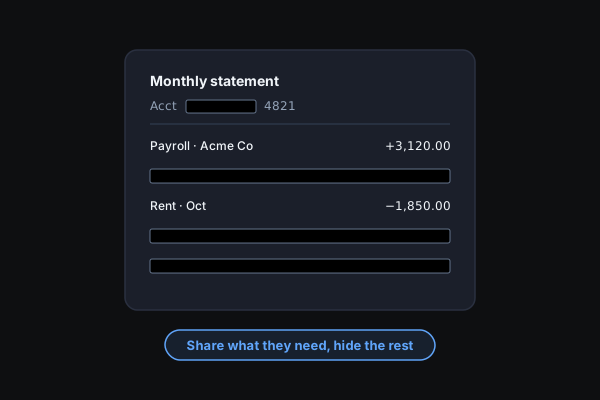
- Black out what they don't need. Type your full account number and let the detectors catch card numbers and IBANs. Box spending lines by hand.
- Stamp who it's for. For example: "For Acme Lettings, 12 Elm St application only · Oct 2026". A copy that names its purpose is hard to reuse for anything else.
- Make it email-sized, then download. The tool shows you what it changed and re-checks the finished file before you get it.
If you only need the redaction, Redact PDF does just that step.
Sending it
- Send it to a person or an official portal you recognize. Be wary of a "landlord" who asks for statements before you've seen the property or met anyone — document collection is a common rental scam.
- Send the prepared copy, not the original download from your bank.
- If you're asked for the same documents again later for something else, make a new copy stamped for that purpose rather than reusing this one.